
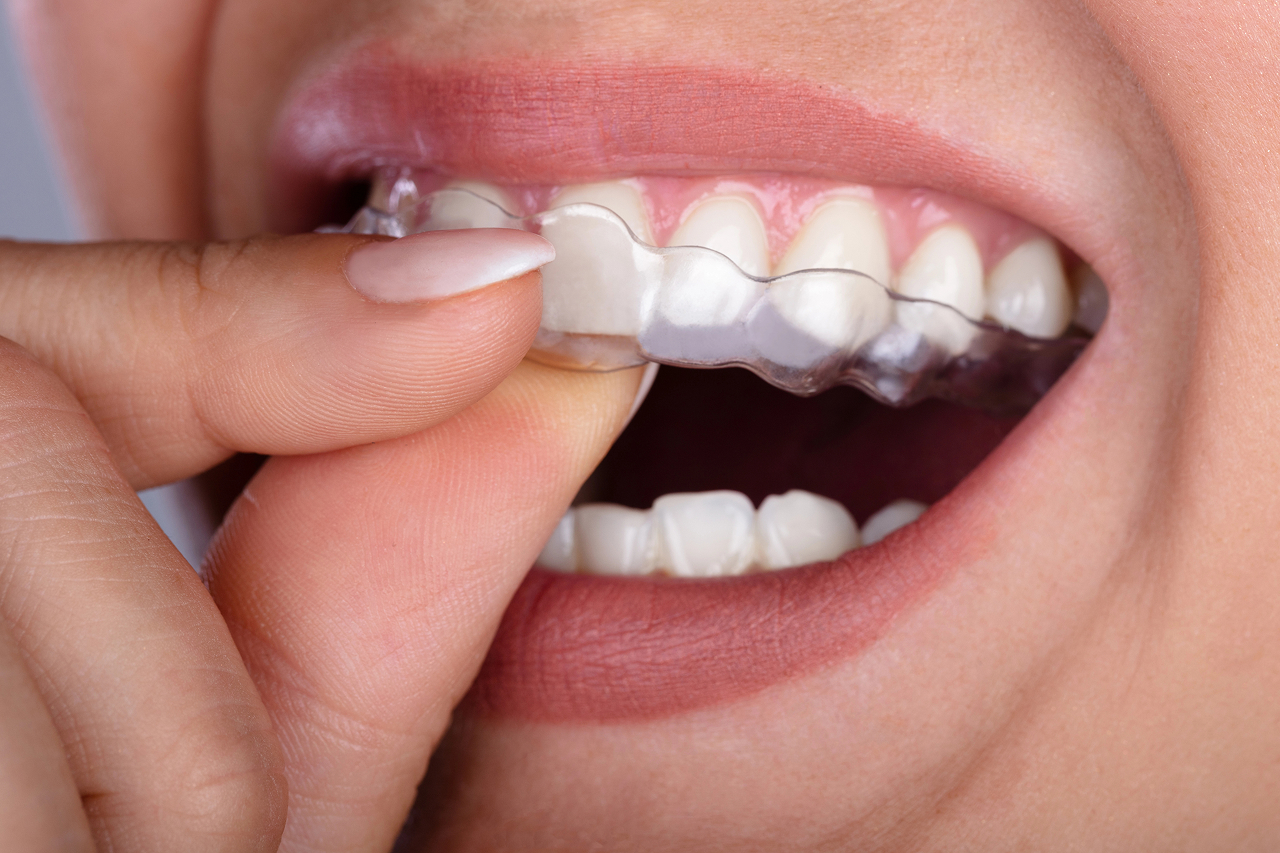
A night guard does not stop the brain from sending the signal to grind, but it does stop the teeth from grinding directly against each other, which is where almost all the damage happens. Research on bruxism treatment consistently shows that custom fitted night guards reduce tooth wear, protect existing dental work, and ease jaw muscle tension, even though they do not eliminate the underlying grinding habit itself. For most patients, that distinction matters less than the outcome: fewer cracked teeth, less morning jaw soreness, and a slower rate of wear on natural enamel over time.
What Does a Night Guard Actually Do?
A night guard creates a physical barrier between the upper and lower teeth, absorbing the force of clenching and grinding instead of letting enamel wear directly against enamel. This is why patients often notice less morning jaw stiffness within the first few weeks of consistent use, even before any change in the grinding habit itself. The guard is treating the consequence of bruxism, not curing the cause, which is usually rooted in stress, sleep patterns, or a bite alignment issue that a guard alone cannot correct.
Why Doesn’t a Night Guard Stop the Grinding Itself?
Bruxism is largely controlled by the nervous system during sleep, often tied to stress levels, sleep quality, or in some cases sleep disordered breathing, none of which a night guard can influence directly. What rarely comes up in casual conversation about night guards is that patients sometimes expect the habit to fade over time simply because they are wearing one, when in reality the muscle activity often continues at a similar level. The guard’s job is damage control, giving the teeth, restorations, and jaw joint a buffer while any underlying cause is addressed separately, whether that means stress management, a sleep evaluation, or adjustments to an existing bite issue.
Does a Custom Fitted Guard Make a Real Difference Over a Store Bought One?
Store bought guards are bulkier, less precise, and tend to shift out of position during the night, which reduces how much protection they actually provide and can be uncomfortable enough that patients stop wearing them within a few months. A custom fitted guard is molded to the exact shape of a patient’s teeth and bite, distributing force more evenly and staying in place through a full night of sleep. For patients already investing in other dental work, such as crowns, veneers, or dental implants, a properly fitted guard is often the difference between that work lasting years longer or wearing down prematurely under nightly grinding force.
Can a Night Guard Help With More Than Just Grinding?
Beyond protecting teeth, a well fitted night guard can ease symptoms connected to jaw tension, including morning headaches and soreness around the jaw joint. In patients where clenching is a significant contributor to jaw strain, a guard is often one part of a broader TMJ treatment plan rather than a standalone fix. Some designs are also used alongside snoring related devices, though a standard night guard and a snoring specific appliance are not automatically the same thing, and patients dealing with both concerns should be evaluated for each separately. Dr. Rodas notes that patients often assume a night guard failed if grinding sounds continue, when the more accurate measure of success is how the teeth and jaw look and feel over the following months, not whether the habit disappeared entirely.
How Do I Know If I Need a Night Guard?
The most common signs include waking up with a sore jaw, noticing flattened or chipped edges on the front teeth, a partner mentioning grinding sounds during the night, or existing dental work wearing down faster than expected. None of these signs confirm bruxism on their own, but together they are usually enough for a dentist to recommend an exam and, if appropriate, a custom night guard fitting.
A night guard will not stop the grinding habit itself, but it does stop most of the damage that habit would otherwise cause, which is the outcome that actually protects a smile long term. Dr. Ozzie Rodas and Dr. Helena Wu fit night guards individually for each patient at High Desert Dental in Albuquerque, so the protection matches the bite rather than a generic mold. Call (505) 888-2606 to schedule an evaluation and find out if a night guard is right for you.