
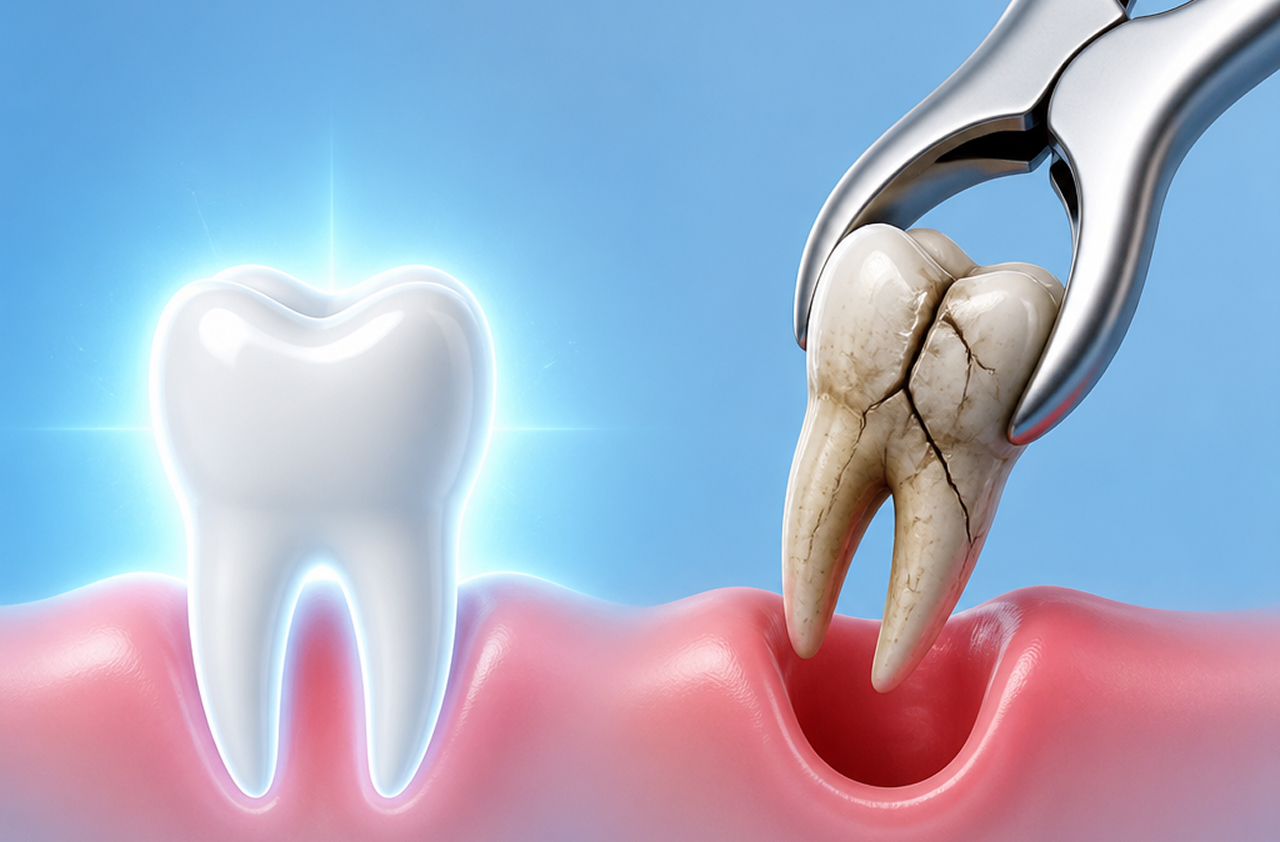
Most patients assume the decision between a root canal and an extraction comes down to how much pain they are in, but pain level is actually one of the least reliable indicators dentists use. A tooth can be excruciating and still be worth saving, and a tooth can feel almost fine while already being too compromised to keep. The real decision hinges on how much healthy structure remains, whether the surrounding bone is stable, and whether the tooth can still function normally once treated. Understanding what actually goes into that decision helps patients ask better questions at the appointment, instead of assuming the more painful option is automatically the one being removed.
Why Pain Level Is Not the Deciding Factor Dentists Rely On
Pain is a symptom, not a diagnosis. A tooth with an infection can feel unbearable due to pressure buildup inside the tooth, yet still have enough structure and bone support to justify a root canal instead of removal. Conversely, a tooth can go through periods of feeling fine even while a crack extends below the gumline, quietly ruling out a root canal as a viable option. Dentists rely far more on X-rays, the depth and direction of any crack, and how much of the tooth’s root structure remains intact than they do on how much a patient reports it hurts.
When a Root Canal Is the Better Option
A root canal is typically recommended when the outer structure of the tooth is still sound enough to support a crown afterward, and the infection or damage is confined to the inner pulp rather than extending into the root or surrounding bone. Removing the infected tissue and sealing the tooth allows patients to keep their natural tooth root, which continues to support the jawbone in a way that no replacement fully replicates. This is one of the most overlooked reasons dentists lean toward saving a tooth whenever reasonably possible. The root itself does ongoing work that patients rarely think about until it’s gone.
When Extraction Becomes the Necessary Choice
Extraction becomes the more responsible recommendation when a crack extends below the gumline, when the root structure has fractured in a way that cannot be sealed, or when bone loss around the tooth is severe enough that saving it would not hold up under normal biting force even after treatment. Wisdom teeth that are impacted or causing crowding also typically fall into this category, since they were never functioning as normal biting teeth to begin with. In these situations, extraction is not a failure to save the tooth. It is the option that prevents a bigger problem from developing around it.
What Happens to the Space After Each Option?
After a root canal and crown, the tooth generally resumes normal function and does not require any additional restoration to fill a gap. After an extraction, however, the space left behind needs a plan, whether that is a dental implant, a bridge, or in some cases a partial denture, since surrounding teeth can shift and bone can gradually recede in the area if it is left empty long term. This is a detail many patients don’t factor into the decision upfront. The cost and timeline of an extraction often needs to include what comes after it, not just the removal itself.
How Long Does Recovery Take for Each Procedure?
Recovery from a root canal is usually mild, with some tenderness for a few days as the tooth settles, especially once a permanent crown is placed. Recovery from an extraction typically takes a bit longer, with the socket healing over one to two weeks, and full bone remodeling continuing for several months afterward. Neither recovery timeline should involve significant pain beyond the first few days, and any pain that worsens after that point is worth a follow up call rather than waiting it out.
Does a Root Canal Hurt More Than an Extraction?
Most patients report that a root canal feels similar to getting a filling, since the area is fully numbed and the infected tissue causing the original pain is removed during the procedure. Extractions are also performed under local anesthesia and are generally not painful during the appointment itself, though the recovery afterward can involve more soreness for a few days compared to a root canal followed by a crown.
Can a Tooth Always Be Saved With a Root Canal Instead of Extracted?
No. A root canal only works if enough healthy structure and bone support remain to hold a crown afterward. Once a crack extends below the gumline or bone loss around the root becomes significant, a root canal will not hold up under normal biting force, and extraction becomes the more reliable long term option, even if the tooth could technically be treated in the short term.
How Do I Know if My Tooth Needs a Root Canal or an Extraction?
An exam and X-ray are the only reliable way to know, since the deciding factors, such as crack depth, root structure, and bone support, are not visible or something a patient can assess on their own. Waiting to find out can sometimes narrow the options, so scheduling an evaluation as soon as symptoms appear gives a dentist the most choices to work with.
Is It Cheaper to Just Extract a Tooth Instead of Doing a Root Canal?
The extraction itself is often less expensive upfront, but the space left behind usually needs to be replaced with an implant, bridge, or partial denture to prevent shifting teeth and bone loss, which adds cost and time down the line. A root canal and crown, while a larger initial expense, often ends up comparable once the full cost of replacing an extracted tooth is factored in.
What Happens if I Don’t Treat an Infected Tooth at All?
An untreated infection can spread beyond the tooth into the surrounding bone and, in some cases, further through the body, and it will not resolve on its own. Whether the eventual treatment is a root canal or an extraction, addressing it early keeps more options available and generally results in a simpler, less invasive procedure than waiting until the infection has progressed further.
The choice between a root canal and an extraction is not about which procedure sounds less intimidating. It comes down to how much of the tooth can realistically be saved and what will hold up long term. Dr. Ozzie Rodas and Dr. Helena Wu evaluate each case individually at High Desert Dental in Albuquerque, walking patients through both the immediate procedure and what to expect afterward, whether that means a crown or a replacement plan. Call (505) 888-2606 to schedule an exam and find out which option is right for your tooth.