
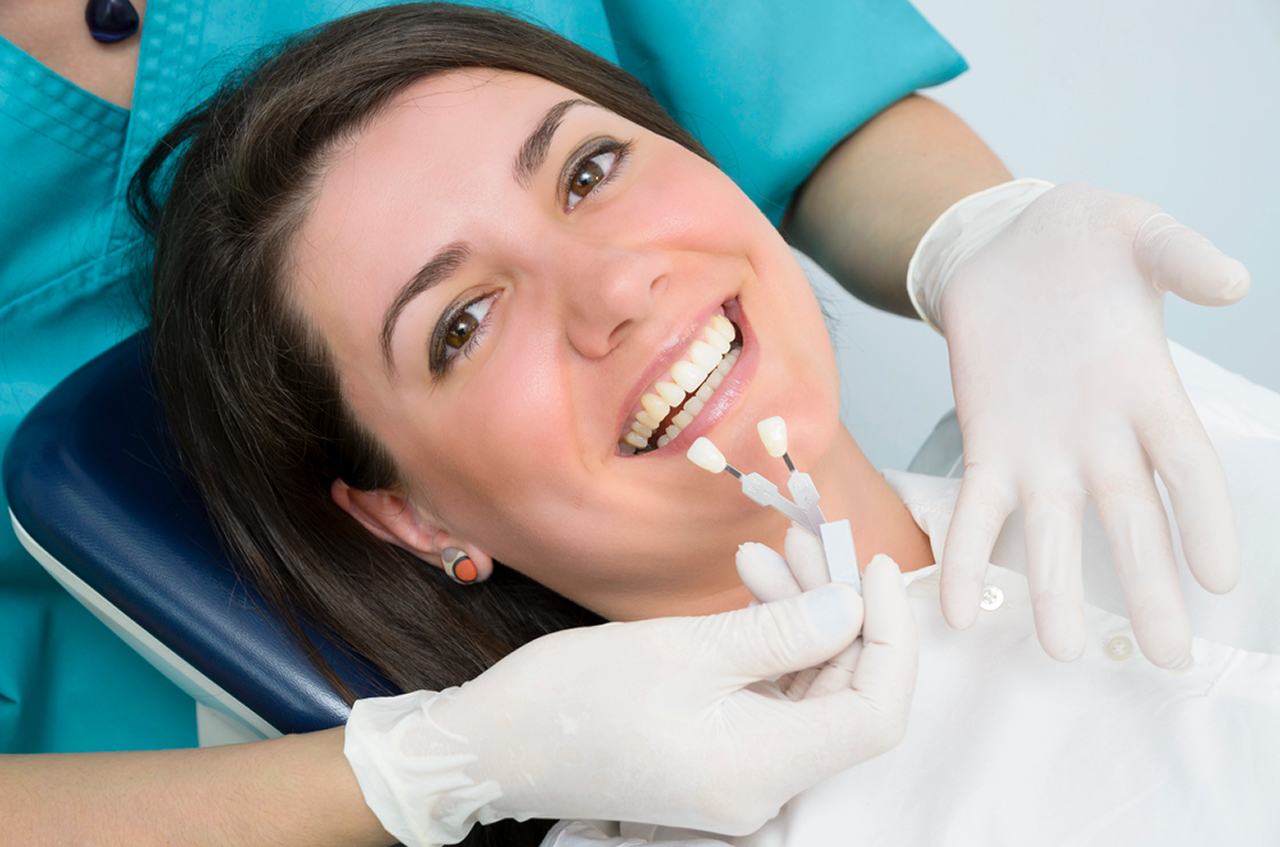
Crowns and veneers get lumped together so often that most patients assume they are interchangeable, but they solve different problems. A veneer is a thin shell bonded to the front of a tooth, built almost entirely for appearance. A crown covers the entire tooth and is built for strength, often after decay, a fracture, or a root canal has weakened the structure underneath. Choosing between them is not really a matter of preference. It comes down to how much of the tooth is left to work with, and whether the goal is cosmetic refinement or structural protection. Understanding that distinction upfront can save patients from paying for the wrong procedure, or worse, choosing a fix that will not hold up over time.
What Is the Actual Difference Between a Crown and a Veneer?
A veneer only covers the visible front surface of a tooth, usually removing a very thin layer of enamel, sometimes less than half a millimeter, before bonding a porcelain or composite shell in place. A crown wraps around the entire tooth, front, back, and biting surface, which means more of the natural tooth structure is reduced to make room for it. That difference in coverage is also a difference in purpose. Veneers are cosmetic first, correcting chips, gaps, discoloration, or minor shape irregularities. Crowns exist primarily to protect a tooth that has already lost significant structure, whether from a large filling, a crack, or decay that reached deep into the tooth. A tooth can look nearly identical to a neighbor and still need one instead of the other, depending on what is happening beneath the surface. This is one detail patients rarely hear explained clearly. The visible symptom, like a chipped edge, does not tell you which repair is correct. Only an exam and, often, an X-ray can confirm how much healthy structure remains.
When Does a Tooth Need a Crown Instead of a Veneer?
A crown becomes the right choice once a tooth has lost enough structure that a thin shell would not have anything solid to bond to. This typically includes teeth with large fillings taking up most of the biting surface, teeth that have undergone a root canal and become more brittle over time, and teeth with cracks that extend below the gumline. Grinding also plays a bigger role in this decision than most patients expect. A tooth that takes heavy biting force every night from clenching is a poor candidate for a veneer, since the thin porcelain shell was never designed to absorb that kind of ongoing pressure. In these situations, a crown is not the more cautious option. It is the option that actually survives daily use.
When Is a Veneer the Better Choice?
Veneers make sense when the tooth structure underneath is healthy and the only concern is appearance. This includes minor chips, permanent discoloration that whitening cannot resolve, small gaps between front teeth, or teeth that are slightly misshapen compared to the rest of the smile. Because veneers preserve more of the natural tooth, they are usually the more conservative option when both are technically possible. Patients considering a smile makeover across several front teeth often benefit from veneers specifically, since the shells can be shaded and shaped as a set, creating a more uniform result than crowns typically allow, as crowns are usually planned tooth by tooth around functional need rather than group aesthetics.
How Long Do Crowns and Veneers Typically Last?
Both restorations are durable, but neither is permanent, and the honest answer depends heavily on daily habits. Well placed crowns commonly last 10 to 15 years, and often longer with good hygiene and regular checkups. Porcelain veneers generally last a similar 10 to 15 years, though composite veneers tend to need attention sooner, closer to the 5 to 7 year range. What shortens the lifespan of either restoration is rarely the material itself. It is usually grinding, biting hard objects like ice or pens, or skipping the six month checkup where a dentist can catch an early problem before it becomes a bigger one.
Questions Worth Asking Before Deciding
- How much of the natural tooth structure remains
- Whether the tooth has had a root canal or a large filling
- Whether nighttime grinding is a factor
- How many teeth are involved and whether a uniform look matters
- What the realistic cost difference looks like based on the specific tooth
Conclusion
Neither restoration is better across the board. A crown protects a tooth that has already lost strength, while a veneer refines the appearance of a tooth that is still structurally sound. The only way to know which one applies is a close look at the tooth in question. Dr. Ozzie Rodas and Dr. Helena Wu evaluate each case individually at High Desert Dental in Albuquerque, so patients leave with a plan built around their actual tooth rather than a one size fits all recommendation. Call (505) 888-2606 to schedule a consultation and find out which option is right for you.