
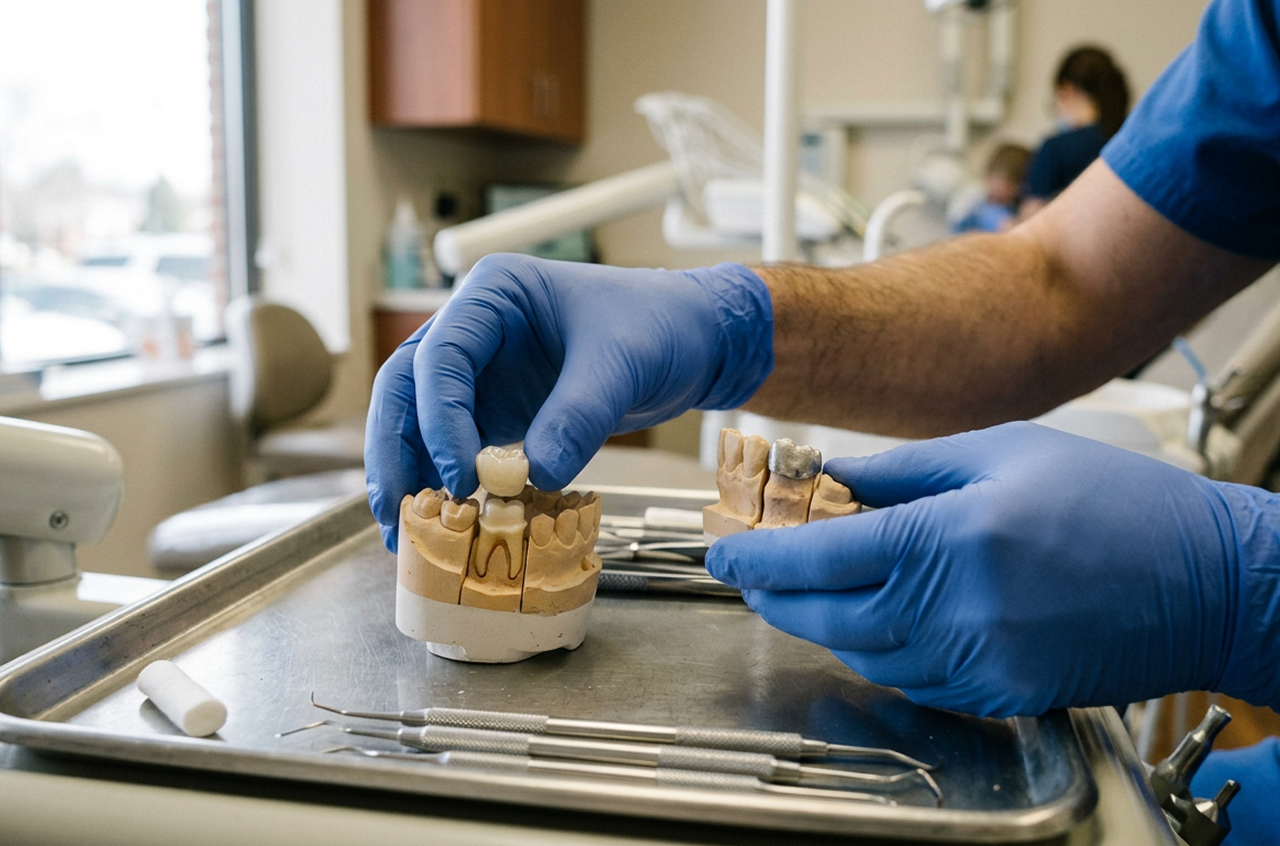
A dental cap and a dental crown are the same restoration, just two different names for it. “Cap” is the older, more casual term patients grew up hearing, while “crown” is the clinical term dentists use today. There is no difference in the treatment itself, only in which word gets used to describe it.
This mix-up comes up constantly during consultations, and it’s worth clearing up before diving into what the procedure actually involves.
Why Two Different Names Exist
The term “cap” dates back to earlier generations of dentistry and describes exactly what the restoration does, it caps the visible portion of a damaged tooth. As dental materials and techniques advanced, “crown” became the standard clinical term, though many patients, especially those who grew up hearing their parents or grandparents talk about “getting capped,” still use the older word today.
Dentists recognize both terms interchangeably, so patients never need to worry about using the “wrong” one during a conversation about treatment.
What a Crown Actually Does
A crown is a custom-made cover that fits over a damaged, weakened, or heavily restored tooth, restoring its shape, strength, and appearance. Crowns are commonly used after a root canal, over a tooth with a large filling that no longer has enough natural structure to support it, or to protect a cracked tooth from further damage.
Crowns are typically made from materials like porcelain, zirconia, or a metal alloy, chosen based on the tooth’s location, the bite forces involved, and the patient’s aesthetic goals.
When a Crown Is Recommended
Crowns are usually recommended in situations where a filling alone would not provide enough structural support. This includes teeth with large areas of decay, teeth that have undergone root canal therapy, or teeth that have cracked under normal biting pressure. In cosmetic cases, a crown can also be used to reshape a tooth that is significantly discolored, worn down, or oddly shaped.
How Long Do Crowns Last
Crown longevity varies by patient, material, and how well the tooth is cared for afterward, but many crowns last a decade or more with consistent oral hygiene and regular dental visits. Grinding habits, diet, and how well the crown margin is maintained over time all influence how long a given crown holds up, so no single lifespan applies to every patient.
What the Procedure Involves
Getting a crown, or a cap, typically takes two appointments. The first involves reshaping the tooth, taking an impression or digital scan, and placing a temporary crown while the permanent one is fabricated. The second appointment involves removing the temporary and cementing the permanent crown into place, adjusting the fit and bite as needed.
Some practices offer same-day crown technology, which can reduce this to a single visit by milling the crown in office rather than sending it to an outside lab.
Frequently Asked Questions
Is a dental cap the same as a crown? Yes, a dental cap and a dental crown refer to the exact same restoration. “Cap” is simply the older, more informal term, while “crown” is the term used in modern dental practice.
Does getting a crown hurt? The procedure is performed with local anesthesia, so patients typically feel pressure rather than pain during the appointment. Mild sensitivity for a few days afterward is common as the tooth and gum tissue adjust.
How do I know if I need a crown instead of a filling? A crown is generally recommended when too much of the natural tooth structure has been lost or weakened for a filling to provide adequate support. Your dentist will evaluate the extent of the damage with an exam and X-rays to determine the right option.
Can a crown fall off? Occasionally a crown can become loose or come off entirely if the cement wears down or the underlying tooth structure changes. This is not an emergency in most cases, but it should be addressed promptly to protect the tooth underneath.
Conclusion
Whether you call it a cap or a crown, the treatment is identical, a custom restoration designed to protect and restore a damaged tooth. What actually matters is whether your specific tooth needs one, which depends on the extent of the damage and the tooth’s remaining structure. Dr. Christopher Rodas and the team at High Desert Dental evaluate each case individually to determine the most conservative, effective option. If you think you might need a crown, call (505) 888-2606 to schedule an exam.